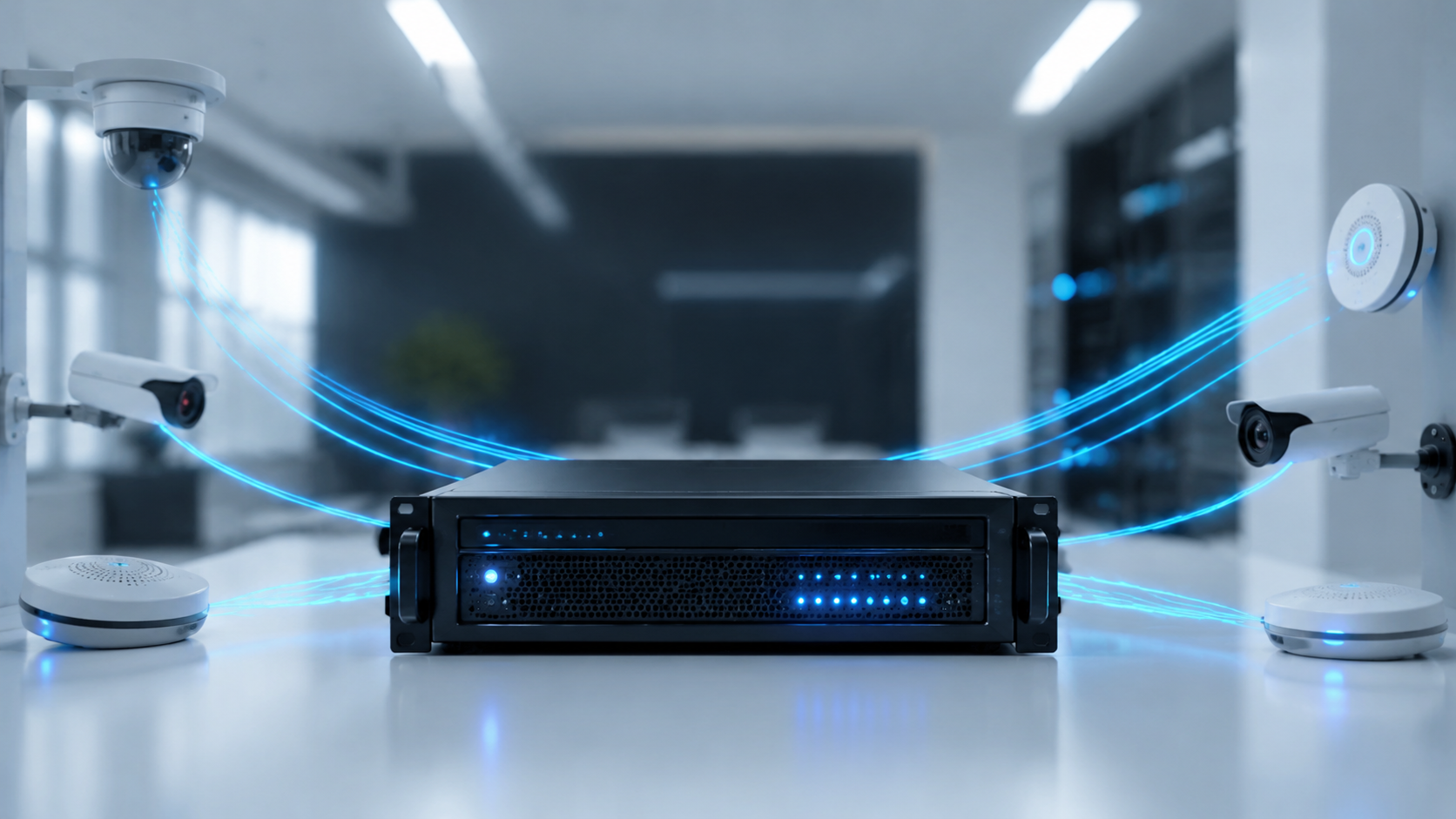

For UK defence and security integrators working on BWS-aligned projects, "the sensor" is not a microphone. It is a typed entity that publishes structured messages over the SAPIENT interface, in a format that the downstream reasoner can consume without translation.
That distinction matters more than it sounds. Most acoustic analytics vendors treat SAPIENT as a connector — a box they bolt on at the end of the pipeline. SED treats it as the primary integration surface for BWS projects.
Background: what SAPIENT is and isn't
SAPIENT is the UK Ministry of Defence's open standard for sensor fusion and reasoning. The standard defines:
- A common message format for sensor reports.
- A common interface for sensor control.
- A discovery and registration model so reasoners can find and configure sensors dynamically.
- A confidence and uncertainty model so a reasoner can fuse heterogeneous sensor data responsibly.
For an acoustic sensor specifically, SAPIENT defines how the sensor reports:
- Event classification (what was detected).
- Confidence (how sure the model is).
- Bearing / direction (where it came from).
- Timestamp (when it happened).
- Sensor health (is the device working).
That is exactly the metadata acoustic detection produces. The fit is natural.
Why a native SAPIENT driver matters
Three integration shapes are common in the market:
- Sensor + translation box. Cost: extra hardware, extra integration code, extra point of failure.
- Sensor + cloud translation. Cost: bandwidth, latency, recurring opex.
- Sensor that speaks SAPIENT natively. No translation, no middleware, no cloud round-trip.
SED is shape 3. The SAPIENT driver is part of the sensor firmware.
How the integration works
For a SAPIENT-compliant reasoner, the SED sensor presents as a typed sensor with acoustic capability. The integration steps are:
- Discovery. The sensor advertises itself on the network via the SAPIENT registration model.
- Configuration. The reasoner configures which event classes the sensor should report.
- Reporting. As events are detected, the sensor publishes SAPIENT report messages.
- Health monitoring. The sensor publishes periodic health messages.
What the reasoner never sees is raw audio. SED processes audio on the sensor edge and publishes only the metadata.
Caveats
- Detection accuracy depends on deployment. Sensor placement for BWS projects typically specifies multi-sensor coverage for triangulation.
- Network and time synchronisation. PTP / NTP time sync and adequate network quality between sensor and reasoner are non-negotiable.
- Edge compute trade-off. Plan power, thermals, and refresh cycles accordingly.
References & Downloads
- SED_SAPIENT_Driver_4.1_EN.pdf (PDF, Integration Guide)
- SED_GDPR_statement_EN.pdf (PDF, GDPR Statement)
- SED_Alerts_and_Events_v3.11_EN.pdf (PDF, Alerts and Events)
- SEDControl_Manual_v3.11_EN.pdf (PDF, SEDControl User Manual)
- SED_installation_kit_v1.0.pdf (PDF, Installation Kit Guide)